
He hurt you. So why are you the one apologising?
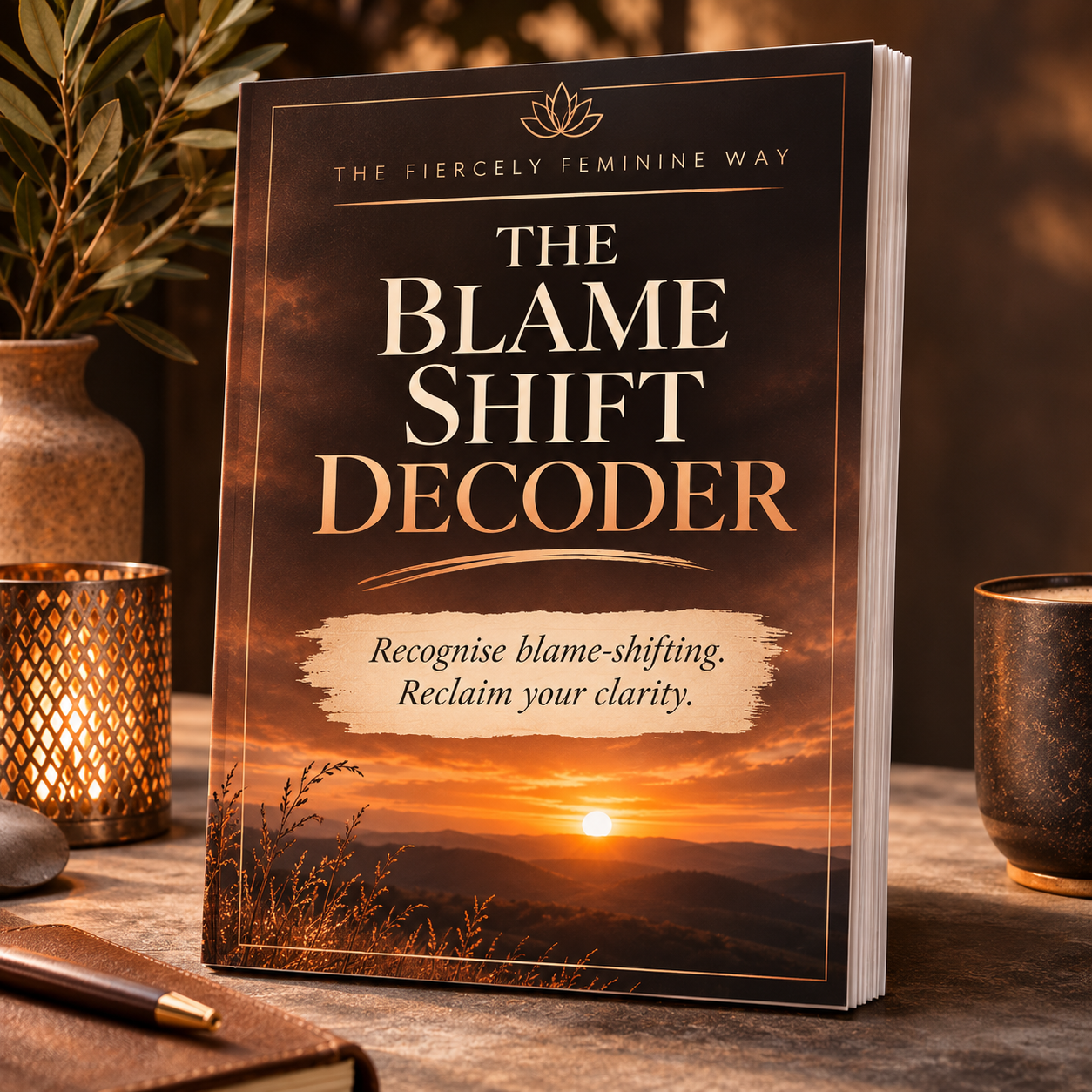
The Blame Shift Decoder, €7
Recognise the deflection. Separate actions from reactions. Reclaim your clarity.
You raise a concern about betrayal. Minutes later, the conversation is about your tone, your questions or your supposed insecurity.
This practical toolkit helps you recognise that shift, identify what still needs addressing and decide what response is safe and useful for you.
10 practical sections | Instant Download | FIERCE Method companion
You wanted answers. Somehow you ended up defending yourself.
You ask about messages you discovered. The conversation becomes about whether you had a right to look.
You explain how much his dishonesty hurt. He calls you insecure.
You ask for accountability. He says you’re always bringing up the past.
And the original concern? Still unanswered.
“You had no right to look at my phone.”
“You’re crazy / obsessed / insecure.”
“Why are you still bringing up the past?”
These are three of the seven common blame-shifting moves explored in the toolkit.
Two things can be true.
Your reaction may need attention. And the original betrayal still requires accountability.
The Blame Shift Decoder helps you separate the original action, your response and the issue that remains unresolved.
This isn’t about excusing shouting, threats, surveillance or retaliation. It’s about preventing a discussion about your response from replacing a discussion about the original conduct.
More than explanations. Practical tools you can use.
The toolkit combines clear teaching, practical exercises and guided reflection. You’ll learn techniques that will guide you not just today but in your future relationships.
Actions vs reactions
Separate observable behaviour, your reaction and what still needs addressing.
Seven blame-shifting moves
Recognise common deflections, what to notice and possible responses when it is safe to respond.
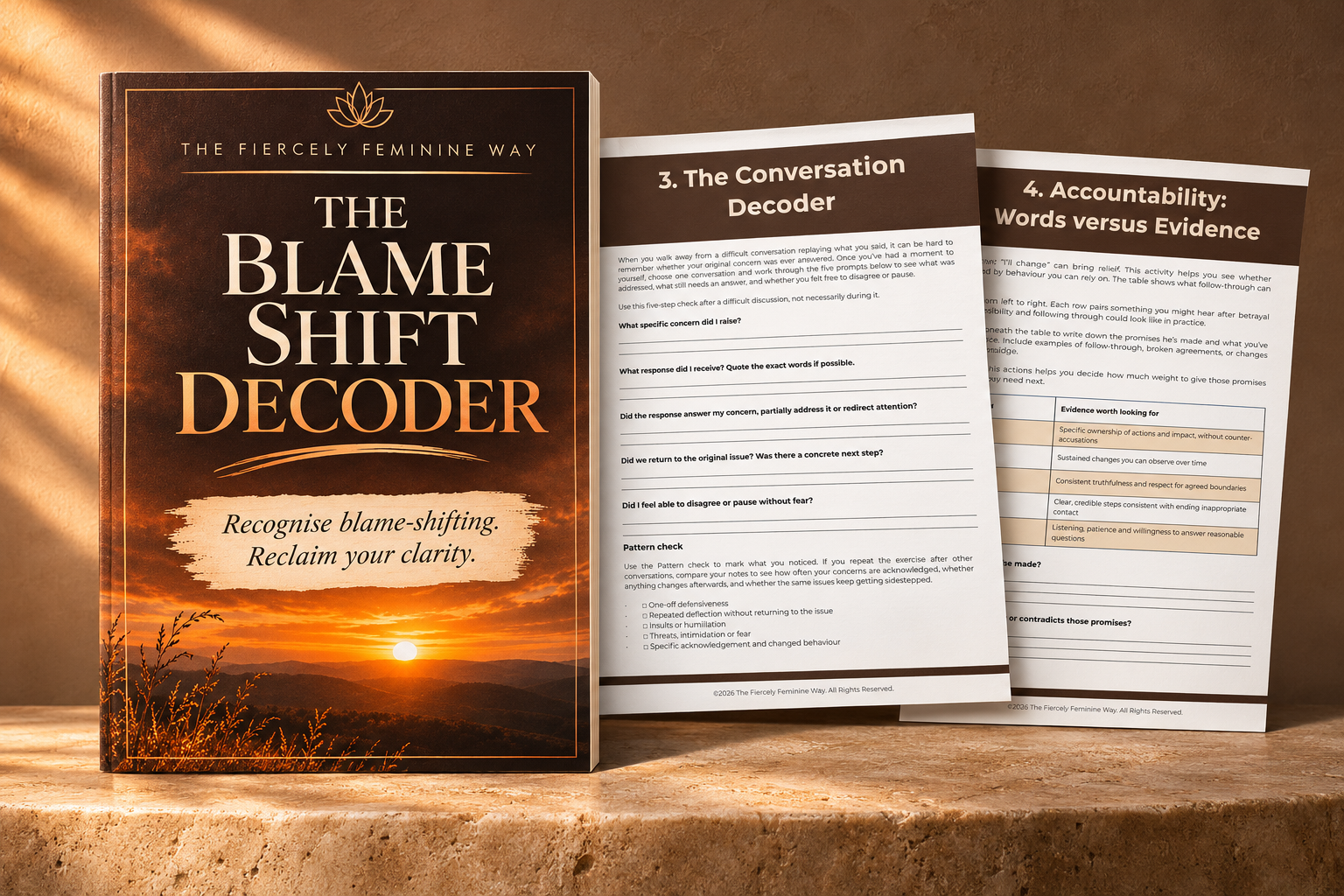
Conversation decoder
Use five questions to review difficult discussions and identify unresolved concerns.
Words vs evidence
Compare promises with observable signs of accountability and sustained change.
Grounded responses & boundaries
Explore five possible responses and build a boundary around actions you control.
Seven-day observation tracker
Notice recurring patterns without pressuring yourself to investigate or confront.
Ten sections. One purpose: greater clarity.
What happened? What did you feel? What still needs answering?
The Actions vs Reactions Framework helps you identify three distinct things:
- The original behaviour
- Your emotional or behavioural response
- The accountability issue still unresolved
Rather than trying to remember every detail during an emotional conversation, you can use the editable exercises to reflect afterwards.
The goal isn’t a perfect comeback. It’s clearer thinking and safer choices.
You don’t need the perfect comeback.
Your toolkit includes five grounded responses for situations where a conversation has become unproductive.
But responding isn’t always the right choice. You can pause, disengage or seek support.
A boundary is about what you will do.
The Boundary Builder helps you identify the behaviour, the need or value you’re protecting and an action within your control.
It isn’t a method of forcing another person to change.
Where confrontation could increase danger, safety takes priority.
Stop judging the relationship by one conversation. Start noticing patterns.
The included seven-day tracker gives you space to record a situation, the action or concern, the response or redirection, whether the original issue was revisited and your next step.
It is a reflection tool, not an instruction to investigate, monitor or confront. Skip it if tracking could compromise your safety.
For the woman who keeps leaving conversations confused.
- You’ve experienced betrayal or dishonesty.
- Your concerns repeatedly become arguments about you.
- You struggle to separate actions from reactions.
- You want to recognise accountability beyond words.
- You need practical reflection tools.
- You want to make safer, more informed decisions.
Clarity without pressure or labels.
A single defensive statement doesn’t prove manipulation. Context, repeated patterns and willingness to return to the original concern matter.
This resource does not diagnose a partner, prove infidelity or guarantee reconciliation.
If you are experiencing threats, intimidation, coercive control or fear of retaliation, prioritise specialist safety support.

You can acknowledge your reaction without accepting his responsibility.
After betrayal, difficult conversations can leave you questioning not just the relationship, but your own judgement.
I believe clarity begins when you can separate what actually happened from the blame you’ve taken on.
That’s the purpose of this toolkit: to give you practical ways to recognise patterns, examine the evidence and choose your next step.
You don’t need to decide everything today. You deserve to understand what you’re dealing with.
Emma
Founder, The Fiercely Feminine Way
Before you begin…
Is this a workbook or a reading guide?
Both. It combines explanations, examples, editable reflection exercises, a boundary builder and a seven-day observation tracker.
How many sections are included?
Ten numbered sections, including the actions versus reactions framework, seven blame-shifting moves, conversation decoder, accountability assessment, grounded responses, boundary builder, reflection activities, observation tracker, FIERCE integration and clarity statement.
Does this mean every defensive response is manipulation?
No. One defensive statement isn’t proof. The toolkit encourages you to consider context, patterns and whether the original issue is eventually addressed.
Do I have to confront my partner?
No. You can use the exercises privately. If confrontation could increase danger, prioritise safety and appropriate support.
Is this part of The FIERCE Method?
The toolkit includes a FIERCE integration section and is designed as a companion resource. It is not the full coaching programme.
Does this replace therapy?
No. It is an educational and reflective toolkit, not a diagnostic instrument, treatment plan or substitute for professional mental-health or domestic-abuse support.
Recognise the deflection. Reclaim your clarity.
Stop losing sight of the original issue. Understand what needs addressing and choose a safe, intentional next step.
The Blame Shift Decoder
Practical, printable toolkit
Instant PDF Download
Educational and reflective resource. Personal use.