
Description
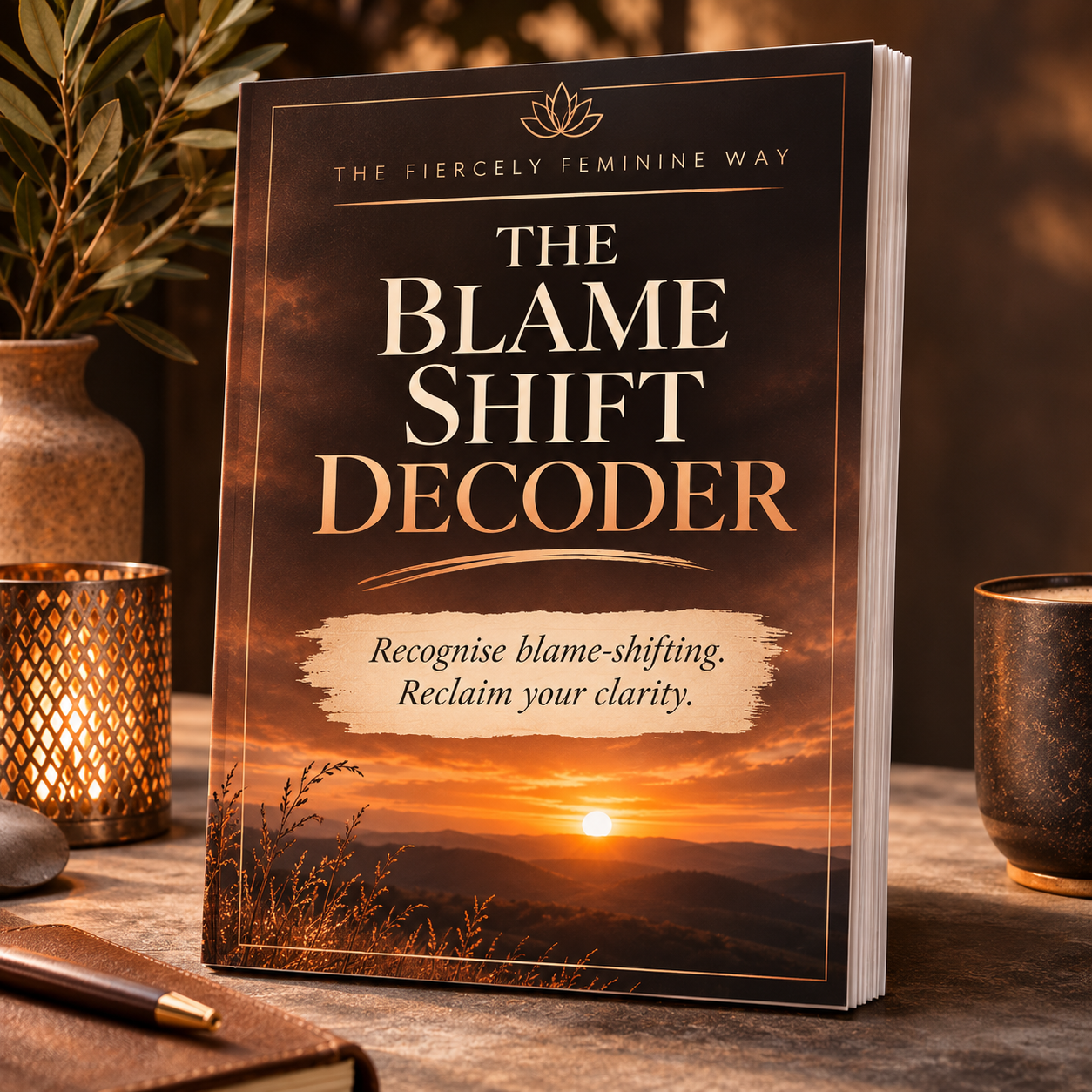
The Blame Shift Decoder
He hurt you. So why are you the one apologising?
You raise a concern about betrayal.
Minutes later, the conversation is about your tone, your questions or your supposed insecurity.
The original issue remains unresolved, and you’re left wondering how the conversation became about you.
The Blame Shift Decoder helps you recognise that shift.
This practical, editable toolkit is designed for women navigating betrayal, dishonesty and emotionally unsafe conversations.
It gives you structured exercises to separate what happened from how you responded, identify unresolved concerns and consider a safe next step.
What’s inside?
01 — The Actions vs Reactions Framework
Separate the original behaviour, your response and what still needs addressing.
02 — Seven Common Blame-Shifting Moves
Explore seven forms of deflection, including when your distress becomes the problem, your tone replaces the topic or forgiveness is demanded as proof of love.
Each includes an example, what to notice and a possible response when safe.
03 — The Conversation Decoder
A five-step reflection exercise to examine a difficult conversation and identify whether your original concern was addressed.
04 — Accountability: Words Versus Evidence
Compare apologies, promises and assurances with observable behaviour and sustained change.
05 — Five Grounded Responses
Explore language for returning to the issue, separating responsibility, asking for specifics, pausing and naming your limits.
06 — Boundary Builder
Create a practical boundary based on the behaviour, the need you’re protecting and an action within your control.
07 — Clarity After the Conversation
Reflect on facts, assumptions, unanswered questions and patterns across conversations.
08 — Your Seven-Day Observation Tracker
A structured space to record concerns, responses, redirection and whether the original issue was revisited.
09 — FIERCE Integration
Connect your learning with the six stages of The FIERCE Method.
10 — Your Personal Clarity Statement
Create a reminder of what you can take responsibility for, what is not yours to carry, what evidence you need and your next safe step.
Who is this for?
This toolkit may be helpful if:
- You’ve experienced betrayal, infidelity or repeated dishonesty.
- Conversations about your concerns frequently become conversations about your reactions.
- You struggle to recognise whether accountability is genuinely being demonstrated.
- You want to reflect on patterns without being pressured into confrontation.
- You’re rebuilding confidence in your judgement and boundaries.
What makes this different?
This isn’t a collection of clever comebacks or a guide to diagnosing your partner.
It encourages you to examine context, repeated patterns and whether someone is willing to return to the original concern.
You can take responsibility for your own reactions without automatically accepting responsibility for someone else’s choices.
And you don’t have to confront anyone to use the exercises.
Your next step starts with clarity.
Recognise the deflection. Separate actions from reactions. Reclaim your clarity.
The Blame Shift Decoder is an educational and reflective resource. It is not a diagnostic instrument, treatment plan or substitute for therapy, legal advice or specialist domestic-abuse support. If you feel unsafe, prioritise your safety and appropriate support.